Loading conditions…
← Back to MyCodex
Stuntz's Blue LegsPsilocybe stuntzii

Edibility
Toxic
Lookalike Danger
5 / 5
Habitat
🌱 Urban lawns, parks
Season
Sep – Dec🌱 Now
"Membranous ring on the stem — other PNW Psilocybes lack rings. Olive cap fading to caramel. Common in lawns and parks of Seattle and Portland."
🌳 Host Trees & Plants
This species is found with or partners with the following hosts. Ectomycorrhizal hosts (green border) form a root-level partnership; ericoid / arbutoid shrubs (purple border) share the same mycorrhizal networks.

Lawn / Turf
Manicured grass
Saprobic substrate
Manicured turf and lawns — shaggy mane, green-gill lepiota, yellow-stainer. Check for herbicide use before eating anything from a lawn.
Named for University of Washington mycologist Daniel Stuntz. Distinguished from other PNW Psilocybes by a persistent membranous ring on the stem (most Psilocybes lack rings). Olive-brown cap fading to caramel; stem bruises indigo.
Habitat
Lawns, parks, and mulched urban plantings in the Pacific Northwest, especially Seattle and Portland. Also found in coastal Maine. Fall through early winter.
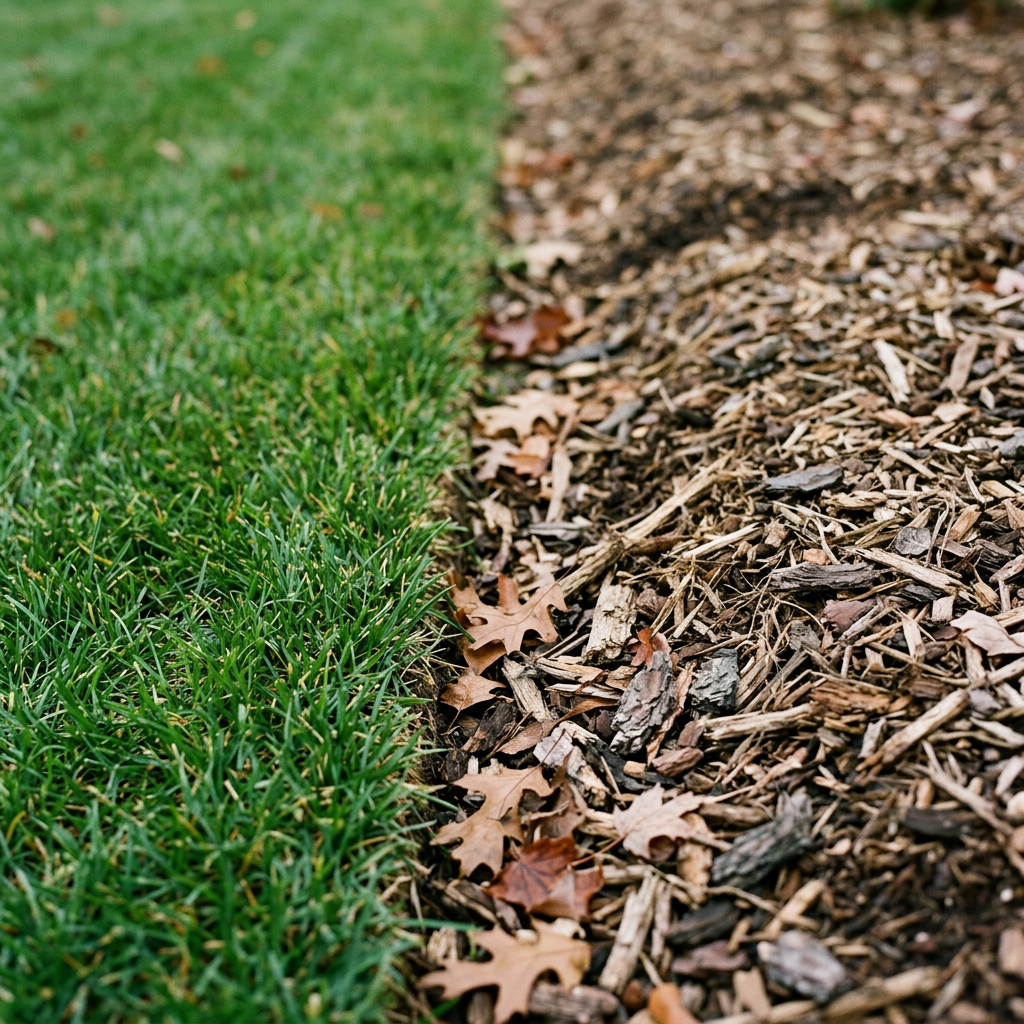
Look for this on the ground
Lawn and wood-chip edge
Manicured lawn meeting fresh hardwood mulch — suburban edge habitat.
Season Windows by Region
Region
Jan
Feb
Mar
Apr
May
Jun
Jul
Aug
Sep
Oct
Nov
Dec
North Cascades
WA · 1,500–8,000 ft
Central Cascades / Snoqualmie
WA · 1,500–7,000 ft
Olympic Peninsula
WA · 500–6,000 ft
Gifford Pinchot / South Cascades
WA · 1,000–8,000 ft
Acadia / Down East
ME · 0–1,530 ft
Northern Maine
ME · 500–5,267 ft
Willamette Valley / Columbia Gorge
OR · 200–1,500 ft
Siuslaw NF / Oregon Dunes
OR · 0–4,097 ft
Mid-Coast Maine
ME · 0–800 ft
Growing Requirements
Min Soil Temp
45°F
Moisture Need
rain 0.5in 7d
Drought Tolerance
low
Elevation Range
0–8,000 ft
Commonly Mistaken For
Species people confuse with this one — often the edible they were hunting for. Each is tagged with its own edibility; Stuntz's Blue Legs is the dangerous one.
Galerina marginata (Deadly Galerina)
DeadlyDEADLY. Same urban habitat. Galerina has a similar ring AND does not bruise blue — the ring alone is not enough; confirm bluing.
Pholiotina rugosa
DeadlyDEADLY (amatoxins). Smaller, paler, lawn-edge habitat.
Identification Tips
- ✓Membranous ring on stem — most other PNW Psilocybes have no ring
- ✓Urban habitat (lawns, parks)
- ✓Bluing reaction on cut stem
Field Notes
Urban lawns, parks
Found Stuntz's Blue Legs?
Photograph it and log your observation on iNaturalist. The community can help confirm your ID — always get confirmation before eating.
Safety: Never eat any wild mushroom without 100% certain identification from multiple sources. This page is for informational purposes only. When in doubt, throw it out.