Loading conditions…

Edibility
Edible
Lookalike Danger
3 / 5
Habitat
🌳 Oak base
Season
Jul – Sep
"'The other hen.' A big gray rosette at the foot of oaks that bruises jet black. Edible young — and the classic Hen of the Woods look-alike."
🌳 Host Trees & Plants
This species is found with or partners with the following hosts. Ectomycorrhizal hosts (green border) form a root-level partnership; ericoid / arbutoid shrubs (purple border) share the same mycorrhizal networks.
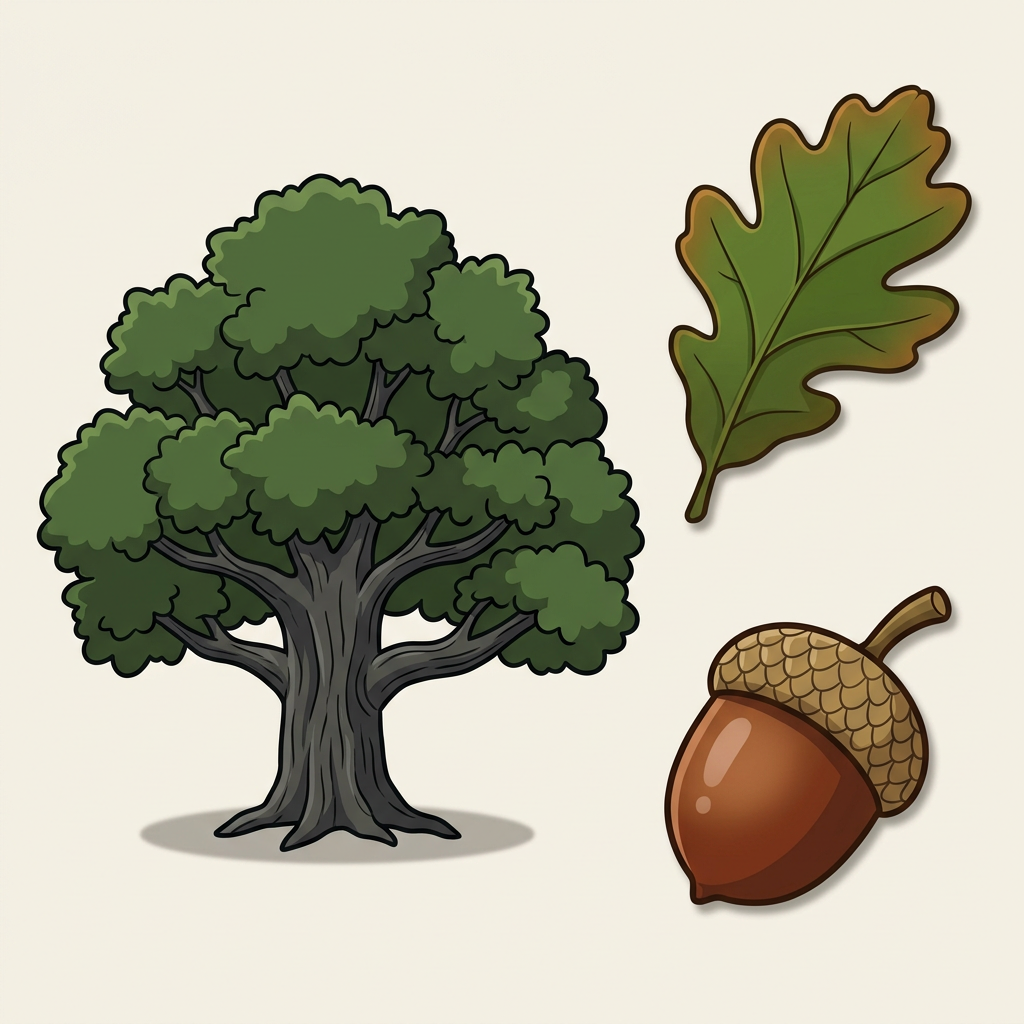
Oak
Quercus spp.
Ectomycorrhizal · Forageable
Truffle / bolete / chanterelle host. Acorns edible after leaching.
A big rosette (often 30 cm or more) of overlapping, fan-shaped caps 5–20 cm wide, whitish to tan-brown and often zoned, rising from a shared base at the foot of a tree. The underside is a white pore surface with very tiny pores. Every part bruises and ages dark brown to black within minutes of handling — the key feature.
Habitat
Common east of the Rocky Mountains, rarely reported in the west. Grows at the base of living oaks and other hardwoods, or on stumps and buried roots, often returning to the same tree year after year; July through September (into fall).
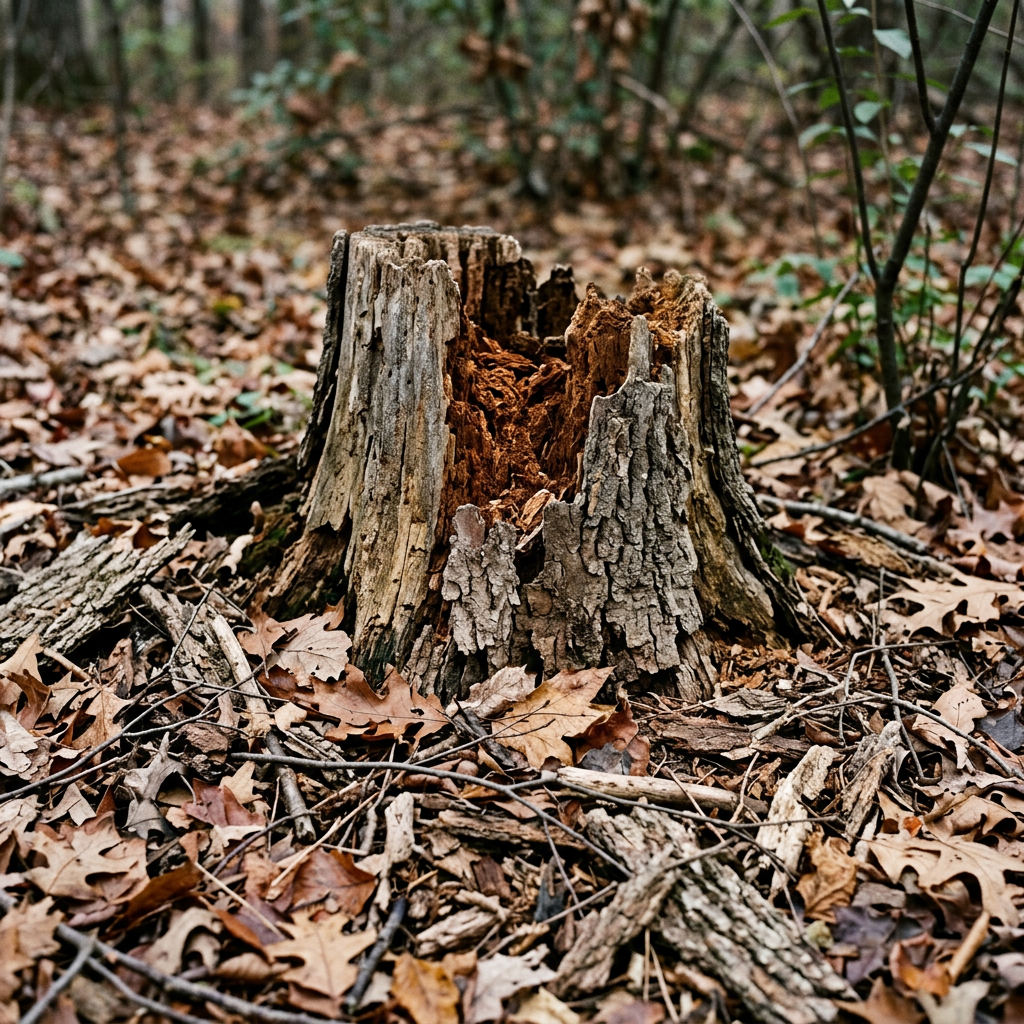
Look for this on the ground
Dead hardwood stump
Weathered oak/maple stump, bark sloughing off, exposed rotting heartwood.
Look-Alikes
Species to rule out before picking. Each is tagged with its own edibility.
Grifola frondosa (Hen of the Woods / Maitake)
EdibleChoice edible, so confusion is not dangerous. Maitake has many small, grayish-brown spoon-shaped caps with a grayish pore surface and does not blacken when handled.
Bondarzewia berkeleyi (Berkeley's Polypore)
EdibleEdible when young. Cream to pale tan, thick-fleshed caps with larger, angular pores; does not bruise black.
Sparassis spathulata (Eastern Cauliflower Mushroom)
EdibleEdible. Made of wavy, ribbon-like folds rather than caps with pores; does not stain black.
Identification Tips
- ✓Rub the pore surface or cap edge — a black stain within minutes confirms it
- ✓Only the soft, outer edges of young, fresh caps are worth cooking; the base is fibrous
- ✓Cook it slowly and thoroughly; it works best in soups, stocks and duxelles
- ✓Mark the tree — it often fruits in the same place for several years
Checked against: mushroomexpert.com · en.wikipedia.org · mdc.mo.gov
Found Black-Staining Polypore?
Photograph it and log your observation on iNaturalist. The community can help confirm your ID — always get confirmation before eating.
Safety: Never eat any wild mushroom without 100% certain identification from multiple sources. This page is for informational purposes only. When in doubt, throw it out.