Loading conditions…
← Back to MyCodex
Hardwood ReishiGanoderma curtisii / Ganoderma sessile

Edibility
Medicinal
Lookalike Danger
3 / 5
Habitat
🪵 Hardwood base
Season
Jun – Sep
"The North American 'reishi' — the two lucidum-complex species (curtisii, sessile) on hardwoods. Distinct from the conifer Reishi (G. tsugae)."
🌳 Host Trees & Plants
This species is found with or partners with the following hosts. Ectomycorrhizal hosts (green border) form a root-level partnership; ericoid / arbutoid shrubs (purple border) share the same mycorrhizal networks.
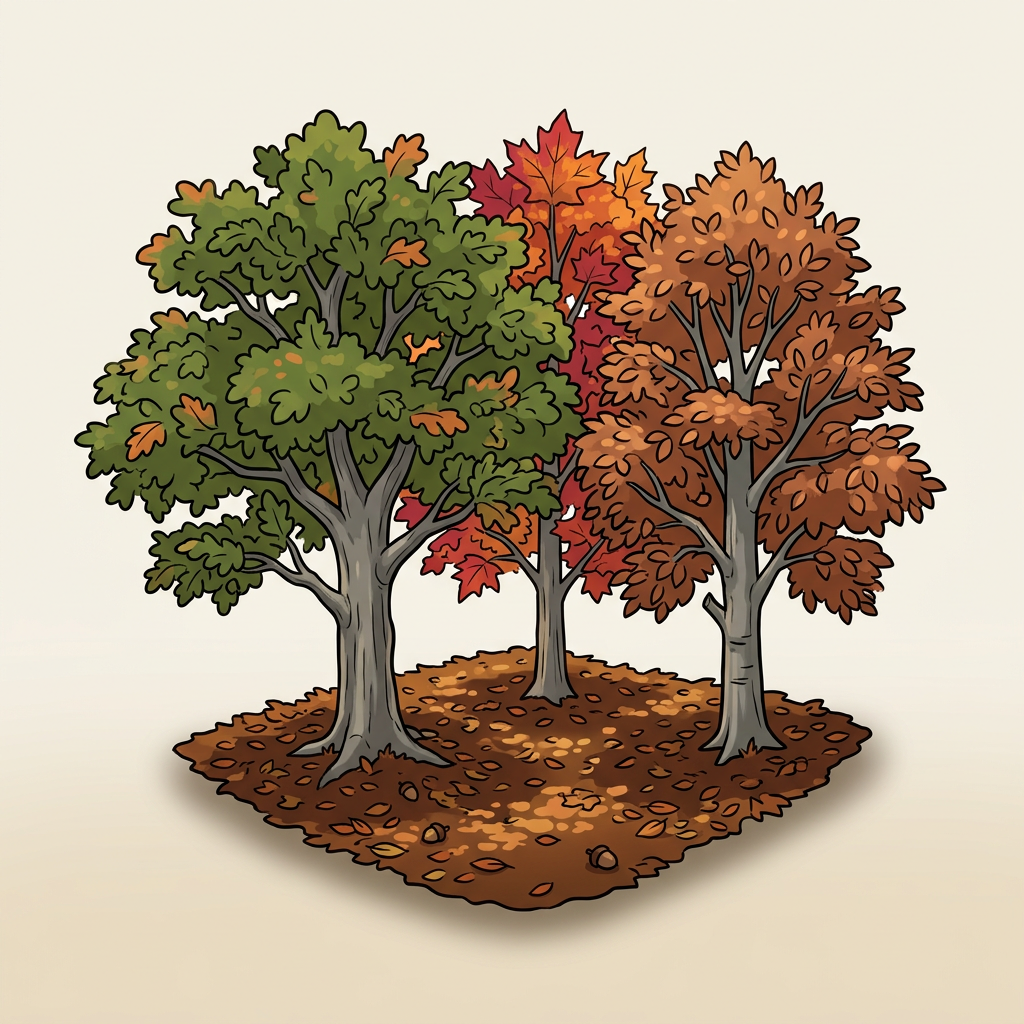
Hardwood Forest
Fagaceae / Betulaceae (generic)
Saprobic substrate
Generic hardwood habitat — oak, maple, beech, birch, etc. Shown when the species is reported from hardwoods generally.
Shiny, lacquered-looking brackets that are red to reddish-brown (young growth zoned yellow and white at the edge), with a whitish pore surface that bruises brown. G. curtisii usually has a stem to the side of the cap and pale-brown flesh without zones; G. sessile is usually stemless and larger (up to 30 cm) with concentric growth zones in the flesh. Both are too tough and woody to eat.
Habitat
Common east of the Rocky Mountains on stumps, logs, root flares and wounds of dying hardwoods (oak, maple, redbud and others). Fruits from spring through fall, with fresh, soft-edged growth in early summer.
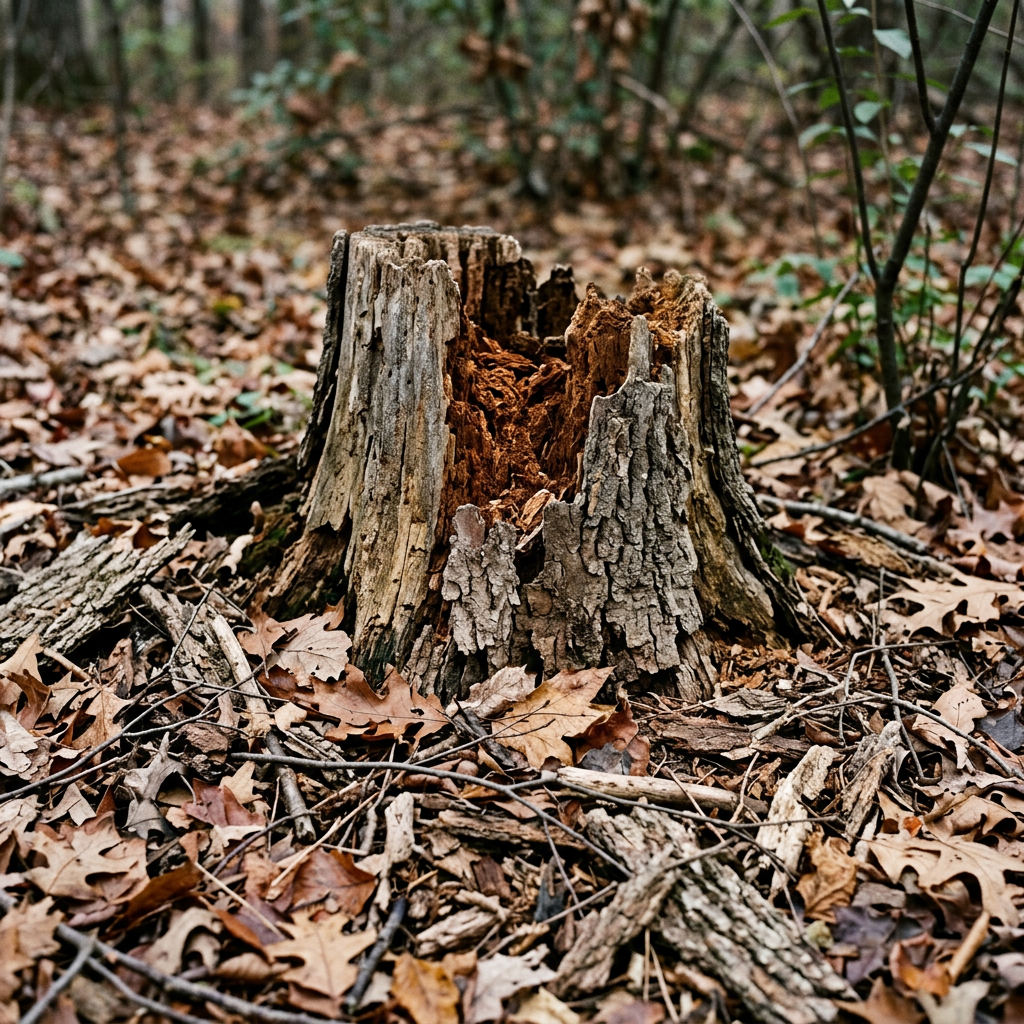
Look for this on the ground
Dead hardwood stump
Weathered oak/maple stump, bark sloughing off, exposed rotting heartwood.
Look-Alikes
Species to rule out before picking. Each is tagged with its own edibility.
Ganoderma tsugae (Hemlock Reishi)
Not dangerousNot dangerous; used the same way. Nearly identical but grows on conifers, almost always eastern hemlock.
Fomitopsis mounceae / F. pinicola (Red-Belted Conk)
Not dangerousNot dangerous but not reishi. Grows on conifers, is hard and hoof-shaped with a red band near the margin, never has a stem, and does not have a uniformly varnished red cap.
Ganoderma applanatum (Artist's Conk)
Not dangerousNot poisonous. A flat, dull gray-brown, non-shiny perennial conk whose white pore surface stains dark brown when scratched.
Identification Tips
- ✓Collect fresh brackets with a pale, still-growing margin and slice them thin right away, before they harden like wood
- ✓Reishi is not risk-free: liver injury, including a fatal case, has been reported, mostly with concentrated powders (sometimes with alcohol). Stop and see a doctor if you develop jaundice or dark urine.
- ✓Prepare by slow simmering or tincture; the fruitbody itself is not food
- ✓Leave some brackets on the log so it keeps sporulating
Checked against: mushroomexpert.com · mushroomexpert.com · en.wikipedia.org · en.wikipedia.org · mushroom-appreciation.com · pmc.ncbi.nlm.nih.gov
Found Hardwood Reishi?
Photograph it and log your observation on iNaturalist. The community can help confirm your ID — always get confirmation before eating.
Safety: Never eat any wild mushroom without 100% certain identification from multiple sources. This page is for informational purposes only. When in doubt, throw it out.