Loading conditions…
← Back to MyCodex
Ringless Honey MushroomDesarmillaria caespitosa

Edibility
Edible
Lookalike Danger
4 / 5
Habitat
🪵 Hardwood stumps
Season
Aug – Nov🌱 Now
"Big ringless clusters at the base of hardwoods. Good cooked, but learn the deadly Galerina and Jack-o-Lantern look-alikes first."
🌳 Host Trees & Plants
This species is found with or partners with the following hosts. Ectomycorrhizal hosts (green border) form a root-level partnership; ericoid / arbutoid shrubs (purple border) share the same mycorrhizal networks.
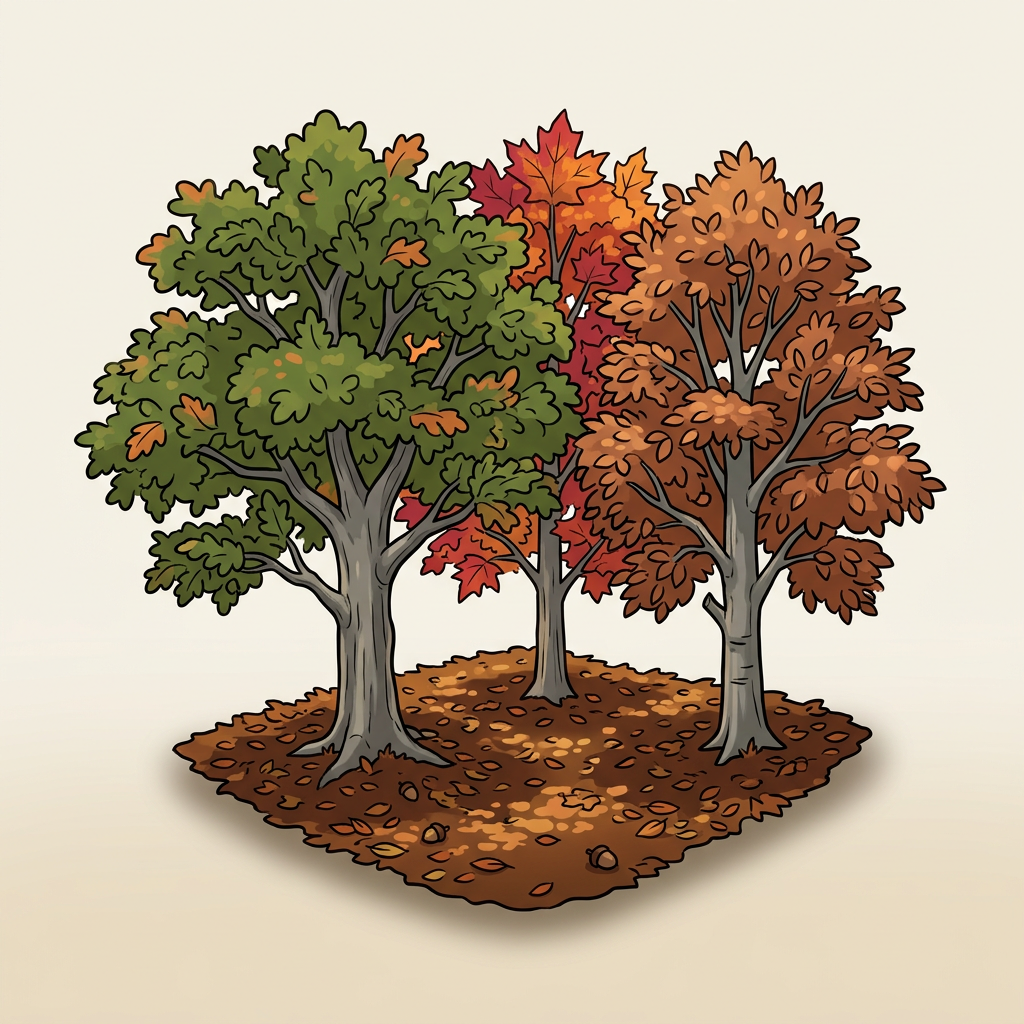
Hardwood Forest
Fagaceae / Betulaceae (generic)
Saprobic substrate
Generic hardwood habitat — oak, maple, beech, birch, etc. Shown when the species is reported from hardwoods generally.
Dense clusters of tan to honey-brown or cinnamon caps (3–10 cm) with small dark hairy scales near the center, on stems that fuse at a tapered base and have no ring. Gills are whitish to pinkish-cream and attached to slightly running down the stem; the spore print is white. Clusters often look as if they grow from soil, but they sprout from buried roots.
Habitat
Eastern North America from about the Great Lakes south to the Gulf and west to Texas and Oklahoma, most abundant in the Southeast. A root parasite and decomposer of hardwoods, especially oaks and silver maple, fruiting in large clusters at trunk bases and on lawns over old roots from late summer through fall (into December in the Deep South).
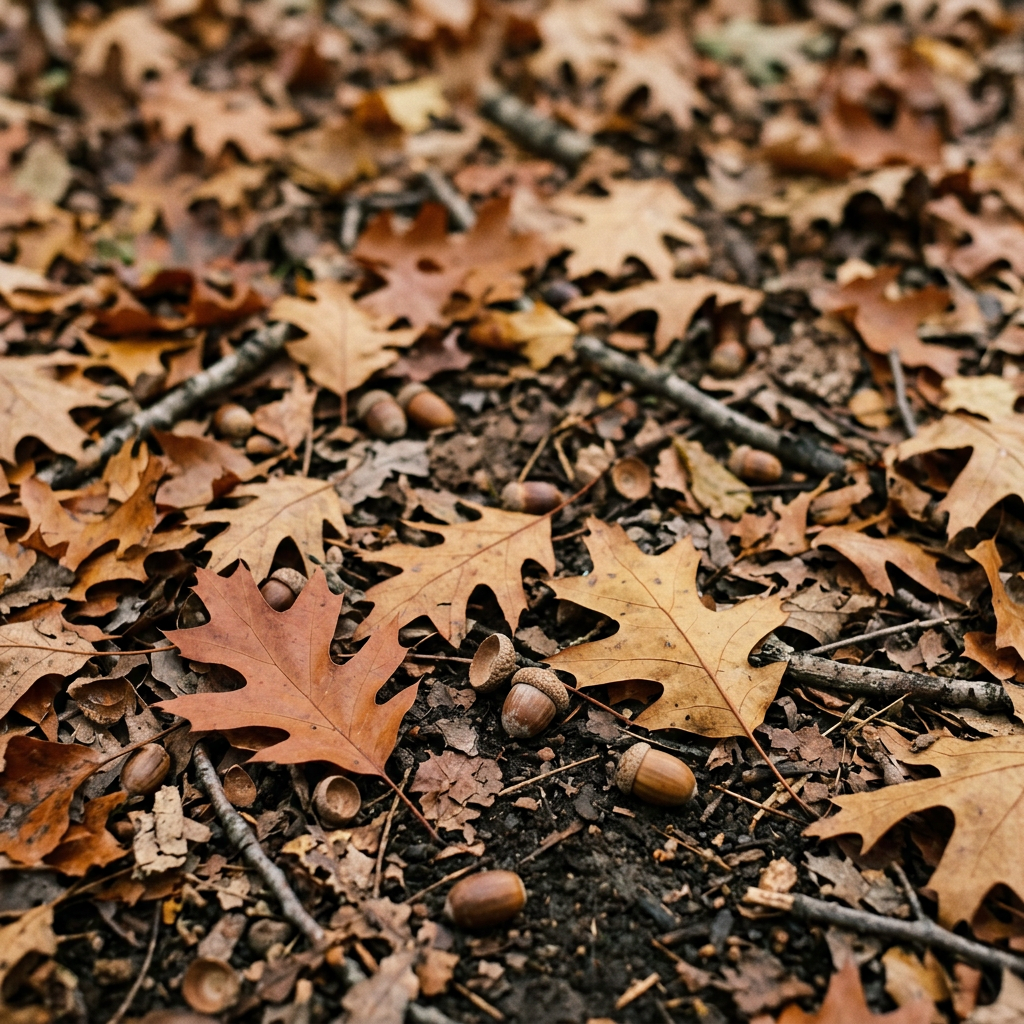
Look for this on the ground
Oak leaf litter
Look for lobed brown oak leaves, scattered acorns, dark humus underneath.
Look-Alikes
Species to rule out before picking. Each is tagged with its own edibility.
Galerina marginata (Deadly Galerina)
DeadlyDEADLY — contains amatoxins, the same liver toxins as the death cap, which cause delayed, potentially fatal liver failure. It is smaller (usually under 5 cm), with smooth, often sticky caps that fade to two-toned, and a RUSTY-BROWN spore print. It grows in clusters on rotting wood, and its thin ring often wears away, so a ringless stem proves nothing. Always take a spore print; honey mushrooms are white.
Omphalotus illudens (Jack-o'-Lantern)
ToxicToxic — severe vomiting and diarrhea. Bright pumpkin-orange with smooth caps (no scales), orange flesh inside, and orange gills running far down the stem. Grows in the same spot at oak bases in the same season.
Hypholoma fasciculare (Sulphur Tuft)
ToxicToxic — GI poisoning. Clustered on wood, but the caps and gills are sulphur-yellow to greenish, the taste is bitter, and the spore print is purple-brown.
Identification Tips
- ✓Spore print every cluster — it must be white; any rusty, brown or purple-brown print means discard
- ✓Check for no ring and white (not orange) flesh, but remember that Galerina can lose its ring too — the white spore print is the real test
- ✓Cook thoroughly (at least 15–20 minutes); some people parboil and discard the water first
- ✓Eat a small portion the first time — a minority of people get GI upset even from well-cooked honey mushrooms
Checked against: mushroomexpert.com · mushroomexpert.com · mushroomexpert.com · en.wikipedia.org · en.wikipedia.org · foragingtexas.com · eattheweeds.com · en.wikipedia.org
Found Ringless Honey Mushroom?
Photograph it and log your observation on iNaturalist. The community can help confirm your ID — always get confirmation before eating.
Safety: Never eat any wild mushroom without 100% certain identification from multiple sources. This page is for informational purposes only. When in doubt, throw it out.